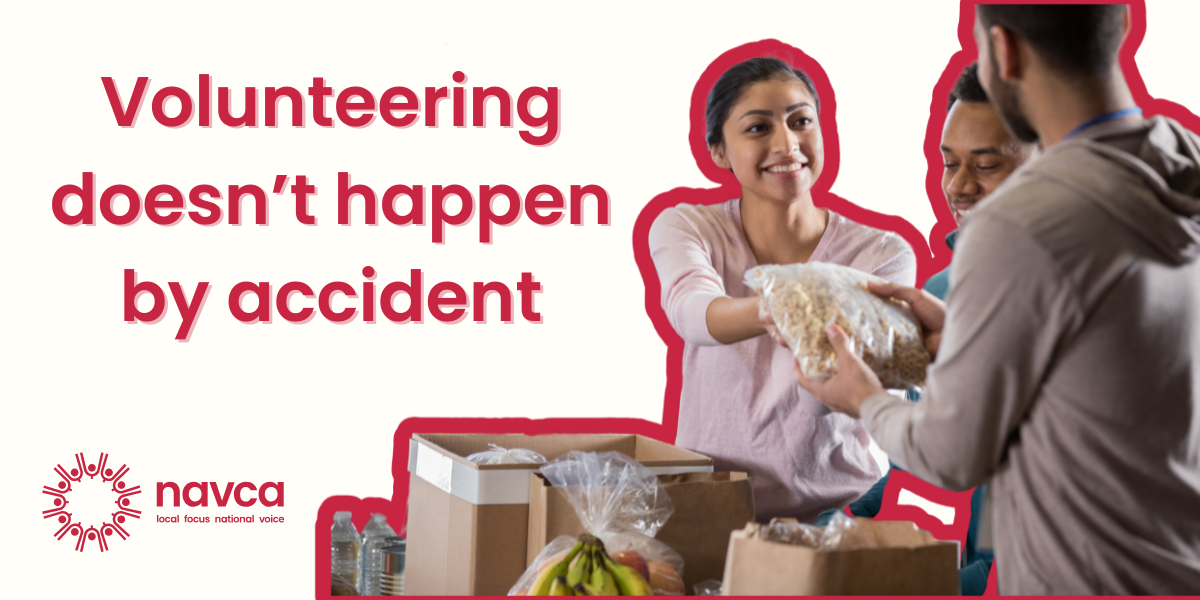
Volunteering doesn’t happen by accident
January 26, 2026
Over the last 12 months, Britain has sometimes felt like a place ill at ease with itself. The cost of living crisis has continued, public services are under pressure, and people with extremist views have sought to sow division and hatred. But this is not the whole story. Every day, thousands of people are giving their time to do something special - volunteering to help others thrive.
Whether through making formal, regular commitments, or through social action, volunteers turn care into action and ideas into impact, strengthening communities and connecting people in ways that are both visible and deeply felt. By giving their time, skills, and compassion, volunteers help people thrive, and communities become more resilient. At the same time, volunteers receive as well as give - a sense of purpose, new friendships, valuable skills, and the power of individual actions to create meaningful change.
Volunteers are vital, and they are at the heart of thriving communities. In many cases, volunteering happens organically because people share a cause and choose to make change. But the energy needed for volunteering to keep going and growing doesn’t happen by accident. Community groups need support finding funders. Groups need to be sure that they can safeguard children and vulnerable adults. Volunteers need to be trained, and we need to take time to celebrate what has been achieved. In more formal settings, volunteer managers need to learn from each other about how to resolve common challenges and how to place more power in the hands of volunteers.
NAVCA members – local infrastructure organisations and volunteer centres – are the hubs for local volunteering support. They know that a well-organised, properly resourced system ensures that volunteers' time and skills have the greatest impact. NAVCA’s Volunteering Doesn’t Happen by Accident Guide draws on the practice of LIQA (Local Infrastructure Quality Accreditation) and VCQA (Volunteer Centre Quality Accreditation) holders, as well as themes from the Vision for Volunteering. The guide sets out the principles for a healthy local volunteering framework based on three key areas:
• Promoting volunteering
• Reducing barriers
• Policy and practice
These areas can then shape an action plan in which all stakeholders work together to enable community resilience, through consistent support for volunteering in all its forms.
As well as the guide, our Volunteering Doesn’t Happen By Accident resource pack also contains a toolkit that NAVCA members can use in a workshop with their local volunteering partners to reflect on their collective impact, identify strengths and gaps, and agree priority actions. Where a workshop isn’t possible, LIOs and VCs can also use it as a straightforward self-assessment.
All the campaign resources are now live, and free for NAVCA members to use with their local partners to assess the maturity of local systems. We welcome feedback from partners on how the resources could be developed and enhanced. Download the resources here.
Throughout 2026, we will continue to share stories about the work that local infrastructure organisations are doing to enable effective volunteering systems that help communities thrive. As this campaign continues, we will develop further resources to strengthen volunteering for all. Keep an eye on our website and social media for the latest updates.